
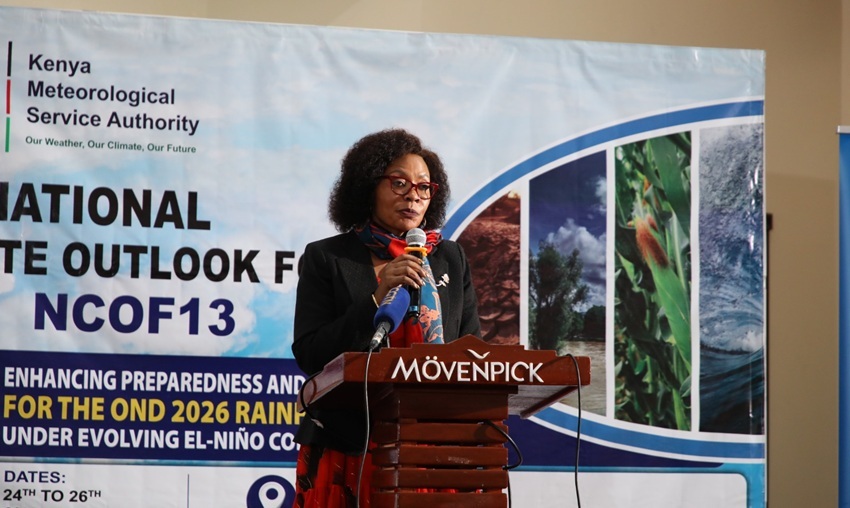
The United Nations Environment Programme (UNEP) has invested about Ksh.4 billion to support Kenya’s climate actions and environmental programmes.
UNEP says it will continue helping Kenya and other African countries integrate climate information into environmental management and adaptation efforts.
The agency is also supporting nature-based solutions and ecosystem protection.
More Stories



UNEP urges Early Preparedness
Dr Margaret Oduk, head of the UNEP Liaison Office to the African Union Commission and UN Economic Commission for Africa, said healthy ecosystems can help reduce the impact of extreme rainfall.
She identified wetlands, forests and watersheds as important natural buffers against floods and other climate-related risks.
Speaking during the 13th National Climate Outlook Forum in Nairobi, Oduk said UNEP has invested US$32 million, about Ksh.4 billion, in support of Kenya’s climate action.
She said climate change is increasing weather variability and making extreme events more frequent and severe.
According to Oduk, the effects are already being felt in food and water security, health, infrastructure, ecosystems and livelihoods.
She said climate information has become an important tool for protecting communities and development gains.
El Nino Rains could bring Risks
Oduk called for stronger preparedness ahead of the October-November-December 2026 rainfall season.
The rains are expected to be influenced by evolving El Nino conditions and a positive Indian Ocean Dipole.
She said the rainfall could benefit agricultural production but also increase the risk of flooding, landslides, infrastructure damage and disease outbreaks.
Oduk urged government agencies and other sectors to develop action plans that reduce risks while maximizing the benefits of increased rainfall.
She said UNEP is ready to work with the Kenya Meteorological Service Authority, the Environment Ministry and other partners to strengthen the use of seasonal forecasts.
Oduk also called for climate advisories to reach farmers, pastoralists, health officials, water managers, disaster-response teams and county planners in formats they can easily use.

Leave a Reply