
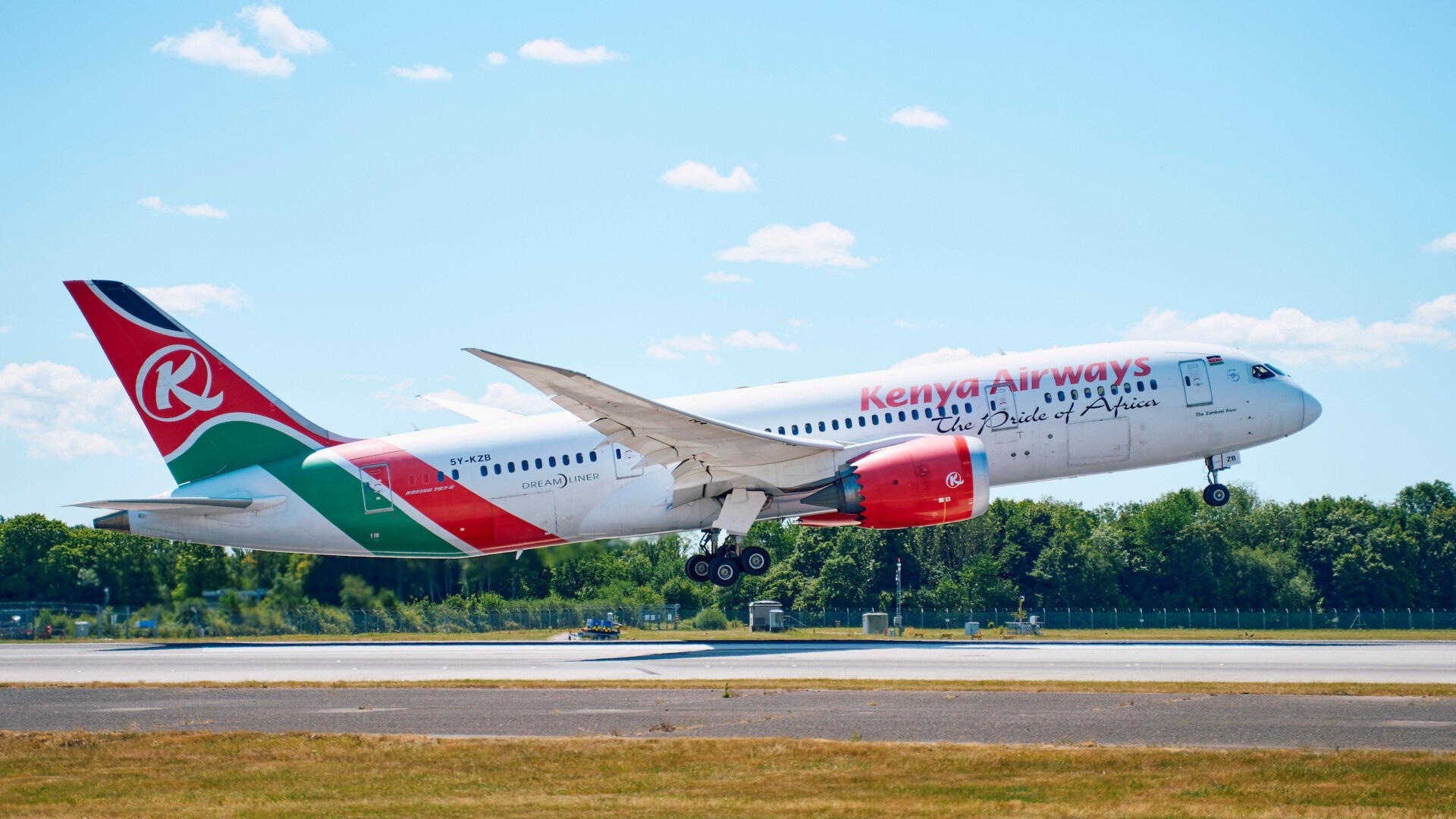
Kenya Airways has recorded a deeper financial loss in the first half of 2026, despite registering growth in revenue and cargo operations.
The national carrier posted a net loss of Ksh.16.1 billion for the six months ending June 2026, compared with a loss of Ksh.12.2 billion reported during the same period in 2025.
The airline’s operating loss also widened to Ksh.10.6 billion, up from Ksh.6.2 billion recorded in the first half of last year.
Read More
Mvurya Challenges Harambee Stars to target AFCON 2027 Title
Malkia Strikers urge Kenyans to fill Kasarani in Title Defence
LINDA Party Warns Sifuna Faction Over Name
High Fuel Costs and Geopolitical Tensions
Kenya Airways attributed the challenging performance to several factors, including geopolitical disruptions, elevated fuel prices and reduced capacity.
KQ Board Chair Kiprono Kittony said the factors continued to put pressure on the airline’s margins and overall network profitability.
He noted that the group’s total operating costs increased by 14 per cent during the period, contributing to the higher loss.
The airline’s total assets also declined from Ksh.183 billion in the first half of 2025 to Ksh.180 billion in the first half of 2026.
Passenger Numbers Hit by Reduced Capacity
Acting Group CEO George Kamal said the airline’s load factor remained resilient whenever sufficient capacity was available.
He explained that the decline in passenger numbers largely reflected the reduction in available capacity rather than a lack of demand for Kenya Airways services.
According to Kamal, the airline continues to face an external operating environment that has affected its ability to fully serve existing demand.
KQ Debt Stands at Ksh.152 Billion
Kenya Airways continues to grapple with a heavily leveraged balance sheet, with the government remaining a key source of financial support.
Acting Chief Financial Officer Mary Mwenga said the airline’s current debt portfolio stands at approximately Ksh.152 billion, with about 90 per cent owed to the Government of Kenya.
Management indicated that discussions around converting some of the government debt into equity could help ease the airline’s financial burden.
Kittony confirmed that the national carrier has continued receiving financial support from its shareholders, particularly the government, which is KQ’s principal shareholder.
Revenue and Cargo Business Grow
Despite the rising losses, Kenya Airways recorded several positive developments during the period.
Revenue increased by 9 per cent to Ksh.81.3 billion, up from Ksh.74.5 billion in the first half of 2025. The figure represents the airline’s second-highest half-year revenue in seven years.
Cargo revenue also grew by 18 per cent, rising to Ksh.8.8 billion from Ksh.7.5 billion recorded during the previous period.
The airline’s cabin factor improved by 3.9 percentage points to 76.3 per cent, reflecting stronger passenger utilization when capacity was available.
Fuel Costs Continue to Eat Into Profits
However, the growth in revenue was not enough to offset the airline’s high operating expenses.
Kenya Airways spent approximately Ksh.29 billion on fuel during the six-month period, significantly affecting its profitability.
Despite the challenging financial results, the airline’s management remains optimistic that improved operating conditions and ongoing measures will help turn around its financial performance.






Leave a Reply